
The Age of AI Assistants is Over
For the past few years, we’ve talked about artificial intelligence as a tool for improving productivity. We experimented with prompts, generated content, analyzed information, and discovered new ways to work faster.
But something more consequential is happening.
We’re moving from the age of AI assistants into the Age of Agents.
An AI assistant helps you complete a task. An AI agent can take responsibility for multiple steps in a workflow, use connected tools, retrieve information, perform actions, and deliver work for human review.
This distinction is changing how companies operate, how employees contribute, and how entrepreneurs build businesses.
The Widening Gap Between Businesses
On August 12, 2026, OpenAI published Enterprise Signals: What frontier firms are doing differently. Its findings reveal a widening gap between companies adopting AI at different levels of sophistication.
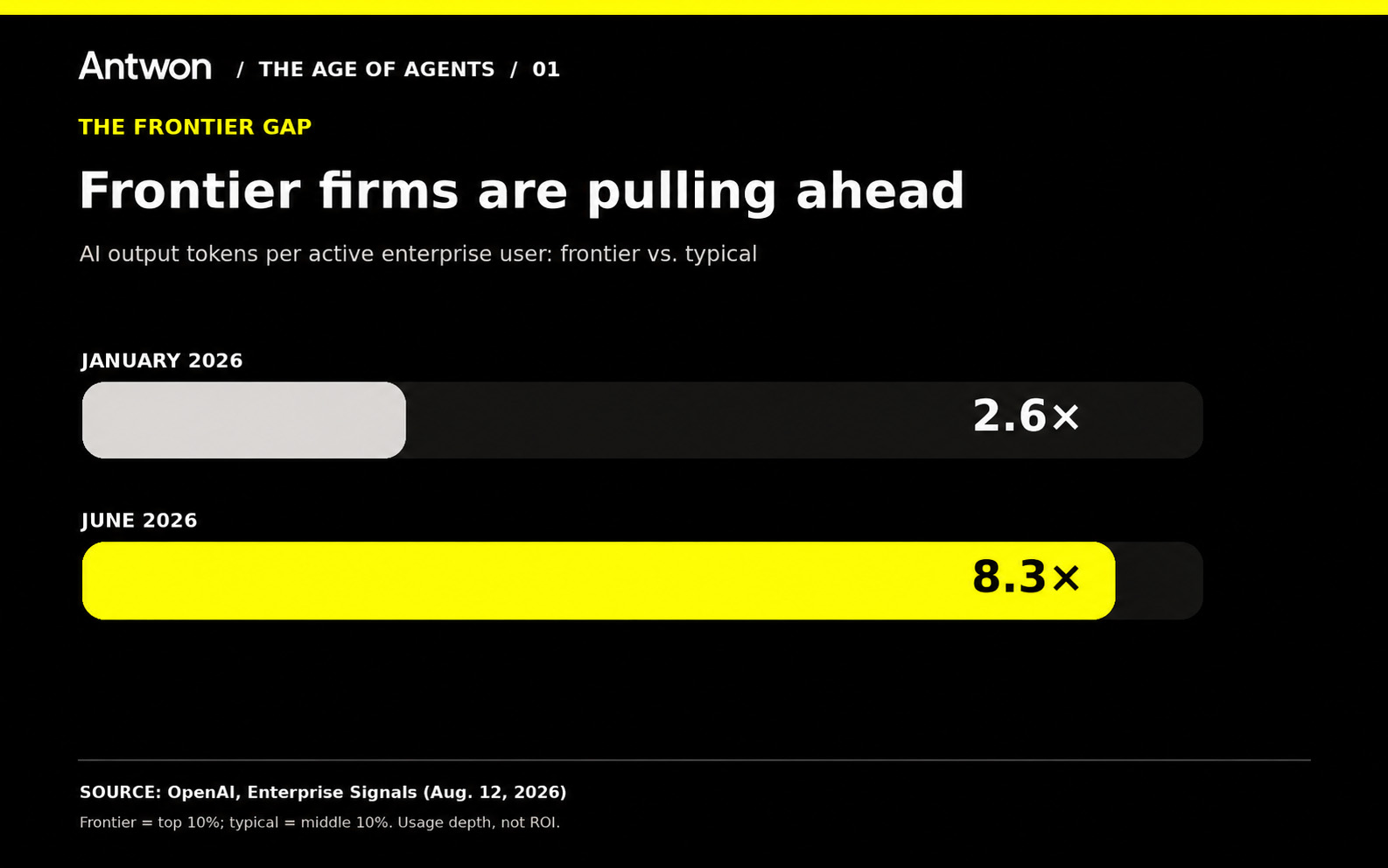
In January 2026, frontier firms generated 2.6 times as many AI output tokens per active user as typical firms. By June, that gap had expanded to 8.3 times.
This doesn’t mean frontier firms are 8.3 times more profitable or productive. It signals that leading organizations are using AI more intensively, delegating more complex work rather than limiting employees to basic chatbot interactions.
The competitive difference is becoming less about access to intelligence and more about how organizations put that intelligence to work.
From Prompt Engineering to Agentic Automating
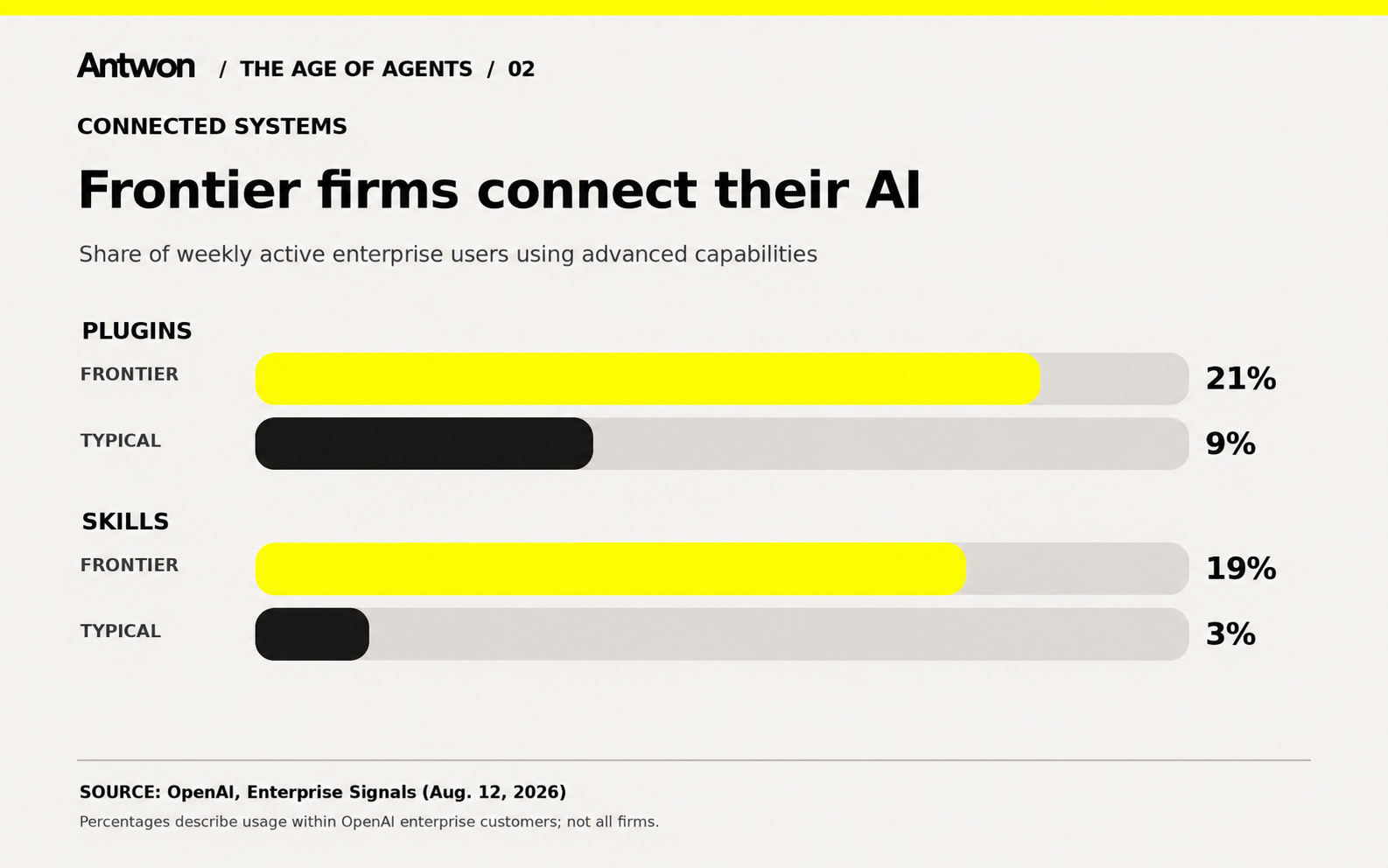
OpenAI also reports that 21% of weekly active users at frontier firms use plugins, compared with 9% at typical firms. These capabilities connect AI to information, applications, and workflows.
Meanwhile, Anthropic’s June 2026 Economic Index describes a similar evolution. Claude usage increasingly involves long-running agentic tasks rather than isolated conversations.
I think the shift we’re experiencing is fundamental. Instead of asking AI to draft an email, imagine an agent researching a prospect, reviewing past communications, preparing a response, updating customer records, and scheduling the next follow-up, subject to appropriate approvals.
We’re transitioning from telling AI what to write to designing AI systems that tell it what work to accomplish and what task to complete… autonomously.
The Enterprise Advantage is Accelerating
This transition to a more agentic future is already here and there’s more data reporting its impact.
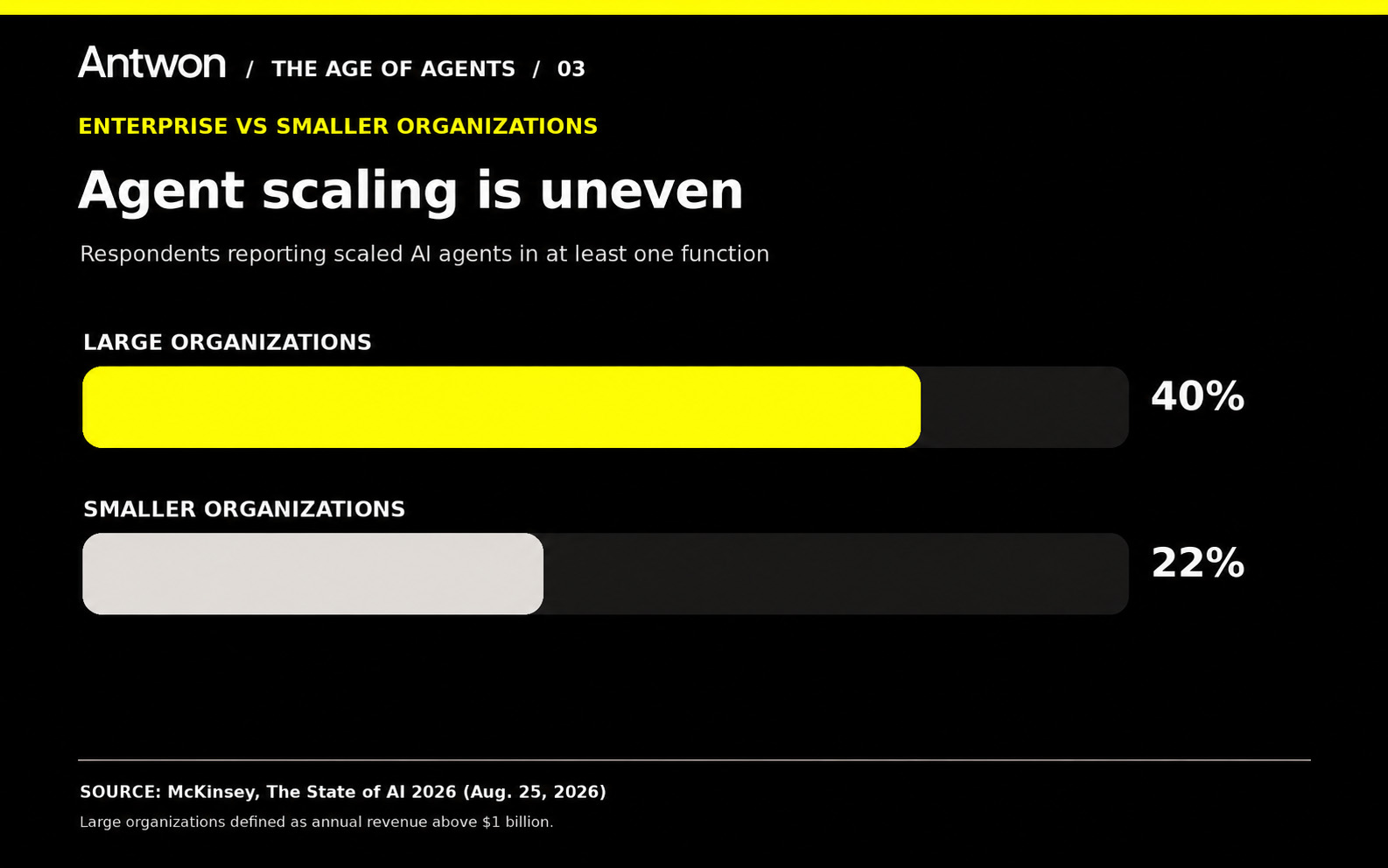
McKinsey’s 2026 State of AI Report found that 40% of respondents at organizations with more than $1 billion in revenue reported scaling AI agents, compared with 22% at smaller organizations.
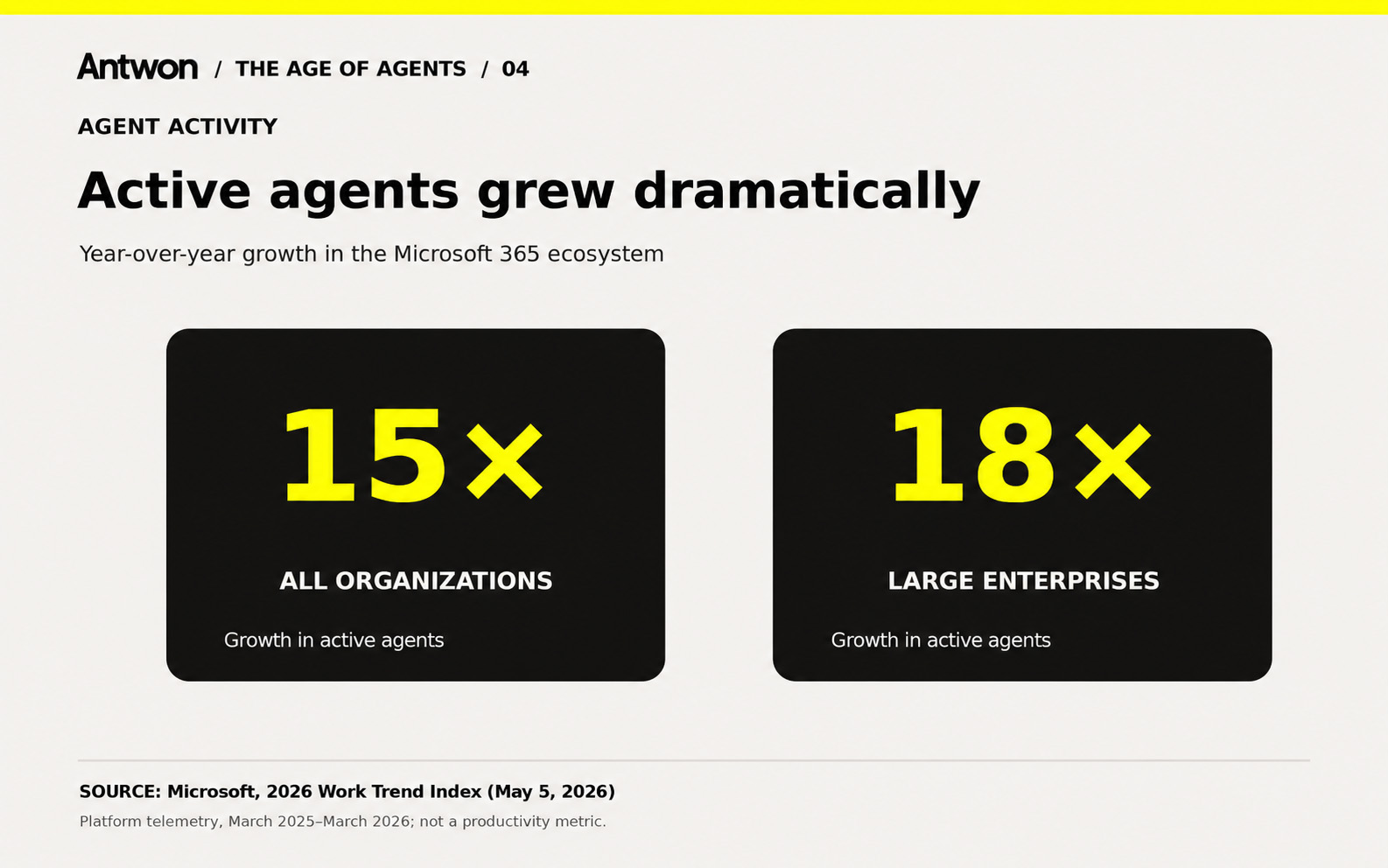
Microsoft’s 2026 Work Trend Index reported that active agents in its Microsoft 365 ecosystem increased 15-fold year over year, reaching 18-fold growth among large enterprises.
These are different measures from different research populations, but they point in the same direction: A future where business is less manual and more agentic and automated.
Large organizations have advantages in capital, technology, and infrastructure. However, smaller businesses can also benefit from their ability to redesign workflows without navigating layers of bureaucracy.
The opportunity isn’t reserved for companies with massive budgets. But it does require intentional action.
The Future Belongs to Those Who Redesign Work
My concern isn’t simply that AI will replace certain jobs. It’s that individuals and businesses will continue operating as though the structure of work hasn’t changed.
That’s how Incremental Obsolescence begins. Not through one dramatic disruption, but through hundreds of small decisions to maintain processes that no longer serve the future.
For entrepreneurs, the question should no longer be, “How can I use AI to save time?”
It should become, “How would I design this business if intelligent agents were part of my workforce from day one?”
For employees, the opportunity is to become more valuable by learning how to direct, evaluate, and improve AI-supported work. For leaders, the responsibility is to build organizations where people, data, technology, and agents can operate together.
Here Are 5 Ways to Prepare for The Age of Agents
#1. Audit your workflows. – Identify repetitive work, disconnected systems, manual tasks, administrative bottlenecks, and processes dependent on you or an individual on your team.
#2. Start with one measurable use case. – Select a workflow with clear inputs, outputs, ownership, and success metrics.
#3. Connect your AI agent. – Whether you’re using ChatGPT, Claude, Perplexity, Grok Bot, Muse, or another AI platform, AI agents become more useful when they can securely access relevant documents, customer information, applications, and company procedures.
#4. Develop an agentic skill(s) and workflow(s). – Rebuild your current workflow as an agentic skill and establish a workflow for your agent. Train your team to design workflows, supervise agents, evaluate outputs, and exercise judgment rather than simply write prompts.
#5. Build governance into execution. – Establish permissions, human approval checkpoints, testing, monitoring, and accountability. Autonomy without oversight introduces unnecessary risk.
A New Operating Model is Emerging
The Age of Agents isn’t about eliminating human intelligence. It’s about expanding what human intelligence can direct and accomplish. The companies that advance won’t necessarily be those with the most AI tools. They’ll be those that rethink how work gets done.
It’s clear that the future of business is becoming more agentic.
The question is whether we’re redesigning our organizations to participate in it or waiting until the competitive gap becomes impossible to ignore. Either way, the age of agents is here.